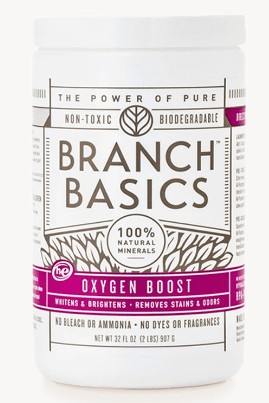
Grass stains, beet juice, blood, peanut butter…. the list goes on for the stains I have gotten on my clothes over the past few months. Historically, once I got a stain on clothes, it was usually kept in my arsenal of base layers for when I went out to the barn to ride. They were then worn until they were threadbare and tossed. If it was a nicer piece, I would keep it in my closet, sad that I couldn’t wear it, and it would eventually get donated if someone wanted to repurpose the fabric, or had a magic stain remover to bring the piece back to life. Well y’all, I’m gonna let you in on a little secret: Branch Basic’s Oxygen Boostis that magic stain remover.
It is so simple and I haven’t had a stain that it can’t handle. My go-to method for washed in and fresh stains is to fill my sink with water (warm or cold, it hasn’t seemed to make a difference), get the stained area damp, sprinkle some of the oxygen boost on said area, fold it up so the stained area is on the inside, and then let it sit in the water for an unspecified amount of time. I have left it in for 10 minutes to 2 hours… mainly because I got side tracked but…. Once I’m ready to do a load of laundry, I wash it like normal and everything comes out good as new. The stain is gone and there is no discoloration from the solution.
Because of this stain remover, I have been able to save so many pieces of clothing and bring thrift store finds back to life. I pair it with laundry detergent made from their signature concentrate and follow it up by a drying cycle with their dryer balls and some pet friendly essential oils. It leaves my clothes fresh without any heavy fragrances.
The one downside of the concentrate and oxygen boost powder is that they come in recyclable, plastic containers as opposed to more eco-friendly, compostable packages. It wouldn’t surprise me if they moved towards different packaging for their refills. Regardless, I love that the concentrate and oxygen boost is made of natural, nontoxic ingredients, especially since my cat seems to like to lick EVERYTHING from the windows to the walls.
***Disclaimer: My hair is on the thinner side but I have A LOT of it. It is straight/wavy but doesn’t really hold a curl. My scalp is on the oily side while my ends tend to be a bit dryer with some breakage. So, all of my reviews are based off of my hair type. But between these two brands, I definitely think that they have a great, sustainable solution for most, if not all, hair types.***
HiBAR Maintain Shampoo bar. SO ERGONOMIC. (From hellohibar.com)
I’ve never been a big hair care routine person, but as the pandemic minimized my interactions with people, I thought it would be a good time to experiment. As many of you know, I started with the ‘no shampoo’ experiment and that didn’t end too well for my scalp. As I tried to figure out what my next sustainable shampoo swap would be, I stumbled upon HiBAR. I was hesitant at first because I tried a few shampoo bars in the past and was not impressed. I like a sudsy soap I can lather my hair and scalp with, and I hadn’t been able to find that in the past. But wow, HiBAR exceeded my expectations in so so so many ways. Here are the top 5:
It is SO ERGONOMIC. It is designed to fit perfectly in the palm of you hand so that it doesn’t slip out as you lather your hair with it. While many shampoo bars are disks, the teardrop shape is truly a highlight.
It lathers! Like full on soapy suds that you can use to make fun hairdos with.
It is LIGHT. I use the maintain shampoo and was a little apprehensive when I saw that the first two ingredients were coconut oil and shea butter as my hair tends to be pretty oily but WOW. After each shampoo, my hair feels clarified and light. It cleanses the hair without stripping it of the natural oils or adding excess oil. It leaves your hair with a moisturized, clean feeling.
It doesn’t turn into a squishy mess. You all know that feeling when you reach for your bar of soap and it feels more like silly putty than actual solid soap. Well this is NOT the case for HiBAR. I leave it on my shower caddy (it hangs over my shower head, is made of metal, and has holes on the bottoms of the shelves) and it is still as solid as the day I took it out of the compostable packaging.
It lasts! Each bar was designed to last at least as long as a 16oz bottle of shampoo. I have been using it for a couple of weeks and have barely noticed anything change in size or shape. Ill let y’all know when this one is getting to its final days however, I can guarantee it won’t be any time soon.
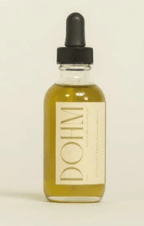
Matcha Moisturizing Oil (From dohmliving.com)
I’ve never been a huge conditioner person but sometimes my ends need a little extra attention. To help my hair get a boost of moisture, I use DOHM Matcha Moisturizing Oil. It combines jojoba oil and matcha powder for a super light but ultra effective hair, face, and body moisturizer. After I shower and wash my hair with my HiBAR Maintenance Shampoo Bar, I brush my hair out and put about 6 drops of the oil onto my fingers. I then finger comb my hair and voila! a super easy 2 step hair care routine that leaves your hair happy and moisturized without being weighed down and oily. 10/10 love the combination of these products. An added bonus is that I feel like I have my life together by saying I have a ‘hair care routine’. Rest assured that life is very much not together, but, as they say, “fake it ’till you make it.”
For years, I was a die hard Origins fan. I have ZERO bad things to say about them but I wanted to make the swap to a more sustainable brand. In comes Earth Harbor with their glass jars and beautiful packaging. Once I ran out of my usual face moisturizer, I decided to make the switch and give their Mermaid Milk Moisturizer a try. Along with lavender, I am also a HUGE matcha fan so thats what initially drew me in. It had very similar properties to the moisturizer that I was previously using so I was extremely optimistic from the beginning.
Photo from earthharbor.com
I WAS NOT disappointed. This moisturizer has a wonderfully light, whipped texture and smells like your favorite beach memory. A little goes a long way and it hydrates your face without feeling weighed down or oily. I pair it with the Aqua Aura eye cream to complete my face moisturizing routine. It has been probably about two months of using it so far and 10/10 will continue using it. It is definitely a more sustainable alternative to other face creams and, in my opinion, it works just as good, if not better, than other, less natural face lotions.
I guess they call it ‘busy season’ for a reason but wowza has it been kicking my butt. Between work, getting settled, and my roommate moving in, it has been a crazy couple of weeks. With that being said, I have been much more active on Instagram, as liking photos and posting stories is much less time consuming than writing a full on post. With more activity on Instagram, Sustenance and Sustainability hit 100 followers! I decided I wanted to do something special to celebrate reaching the small but mighty milestone. I reached out to the 100th follower, a LA based coffee truck (Sunny) turned online marketplace, and asked if they would do a virtual interview with me! Farm Cup Coffee did not disappoint. I could feel their passion for their business and the environment through the series of responses they gave and I am so excited that the simple act of them pressing the follow button on Instagram allowed me to discover another fantastic small business that I am so excited to support.
Photo from farmcupcoffee.com
The One Where We Hit the First Milestone
I had the pleasure of emailing with Tony. He and his partner, Emerson founded this business and have since started an online business to include everything from coffee, golden milk,and chocolate to pins and candles (the neroli and eucalyptus candle smells like a childhood memory. Though I’m not sure which one…).
When I looked more into their shop, two things occurred: 1) I was devastated I didn’t live in Los Angeles because they have lavender, horchata, and macadamia rose cold brew coffees that would become a staple in my home. 2) I knew that they were going to be another small business that I will continue to support.
If you don’t believe my high praises, sit back, relax, and enjoy Tony’s responses that made me love Farm Cup Coffee even more.
***No responses or questions have been edited at all! 100% of the answers are Tony’s and 100% of the grammar/spelling mistakes are mine.***
What motivated you and Emerson to put such a focus on being a sustainable brand? With global warming being a growing crisis, sustainability is the responsibility of everyone. Especially with coffee plant production, growers need good climate and weather to produce quality crops. It just made sense for us to put a focus on sustainability when our source of coffee depends on it.
What are the greatest challenges you two have faced in maintaining a brand with high standards for sustainability? How do you mitigate them? Being a small business for us meant starting off with our personal investment. Sustainable and ethically-made products are typically more costly, especially when the minimum quantities we have to order are more than we can afford. Another challenge was functionality. Sometimes non-sustainable options are just more convenient. For example, plastic is very convenient and functional when it comes to coffee cups, especially iced drinks. We did so much research, and a lot of paper coffee cups were lined with plastic that made them non-recyclable and just ended up in the landfills. We searched until we found a bio-degradeable option that was lined with a plant-based material. Although iced drinks didn’t do as well in those cups, we really had to identify what were non-negotiables for us and explain them to our customers. We try to be as sustainable as possible, and work towards making switches to more sustainable options when they become available and when we’re able.
What advice would you give someone looking to start a sustainable brand or looking to make a difference by improving their existing sustainable practices? We’re always learning as we go, but it all comes with research. Sometimes products can seem eco-friendly on the surface, but when you really dive into it, you find out it’s the opposite. Along with the research, find out what works best for your brand, and test out the products before selling it to your customers. Be open to adapting if something doesn’t work.
For our audience, what questions should they be asking or what should they be looking for when looking into sustainable coffee brands? Where does the coffee come from? How is it grown at the farm level? Some farms keep the trees and plant extra to ensure they still provide homes for birds and other animals. Some plan out their irrigation system to reduce water usage. This is why we try to always put the name of the farm or collective that grows the coffee on our bags. Single origin means you know exactly where your coffee is coming from and can see how they grow their coffee.
What should consumers and businesses be looking for in a sustainable supplier (for items such as packaging, single use items, etc)? When we first started, we didn’t find many options for coffee packaging that would allow us to order low quantities for customization. So this goes back to what works best for your brand. If you can afford it, look for eco-friendly options, then read the fine print. For example, compostable is not the same as recyclable. Some will argue that one is better than the other, but it really depends how you communicate to your customers. If you offer a recyclable bag, then let them know to recycle. If it’s compostable, instruct them to bring it to a compost facility, or send it back to you so you can make sure it happens. Also, look for suppliers that are growing and innovating as new technologies surface. Being 100% sustainable is improbable, but the closer you can get, the better.
What do you think the future of sustainable brands looks like? Unfortunately, many brands are suffering right now due to the pandemic. A lot of people have stepped away from reusable items, especially in public settings. Grocery stores are not allowing reusable bags, coffee shops are not taking reusable cups, and a lot more people are getting take-out/delivery that include a lot of single-use plastic. I think after this is all over, brands that focus on sustainability will have to innovate more than ever to get people back on board.
What is your favorite part about owning the brand? Our favorite part will always be hearing from our customers. Owning a business is the most difficult thing we’ve ever faced, but every little note they write, every smile we see, and every word of encouragement we receive really make this all worth it.
If you could choose one sustainable practice that everyone had to follow, what would it be and why? Oh, this is a tough one! There are so many things we can do. But if I had to choose, I would say EAT LESS BEEF! I watched this documentary many years ago called Cowspiracy. It really opened my eyes to what really goes into the meat and dairy industry. Many people don’t think about it, but cows take up SO much water. The food they eat takes water to grow, they drink water, and processing them into food all take water. They also emit a lot of CO2 gasses. If you can cut it out completely, great! If not, I think if everyone just reduced the amount they ate, there would be less need for cows, and the world would be in much better shape. It’s hard for some people to do, but I think it’s actually a fair trade off for something that could save the planet.
I see that you currently donate to the Toucan Rescue Ranch, what are some other ways you like to give back? Most recently, we donated to the emergency relief fund for the Amazon rainforest fires, and when choosing products to carry, we try to look for ones that give back in their own ways as well. Once we actually are able to pay off all our debts we accrued from starting our coffee van, we’ll be looking to donate to more causes in the countries where we source our coffee. Finca Argovia from Mexico built their own on-site school and playground for the children of the farm workers. Since these farms are typically in remote locations, public schools are not accessible. Eventually, we’d like to donate school supplies to that school.
What’s next for your Farm Cup Coffee? We’ve been adapting to our new normal, so it’s hard to say. We’ve recently focused a lot on e-commerce and cold brew deliveries, but I think what would make sense is a small physical location where we can offer pick-up and a more consistent schedule.
How do you both take your coffee and what are your favorite coffees on your menu? I usually take my coffee iced. I can do plain cold brew, or iced americano. If I’m feeling fun, I’ll get “The Poet” from our menu. It’s a honey-lavender latte, and I’ll take it with oat milk. Emerson usually takes his coffee hot with a good amount of cream, no sugar. When he wants a treat, he’ll do an iced vanilla latte, or “The Artist” from our menu. It’s filled with spices, orange, and cacao with piloncillo (Mexican unrefined sugar). I think our favorite changes with the season, but right now we both love Shantewene from Ethiopia. It’s a great summer coffee with notes of shortbread cookies and boysenberry jam. It smells just how it sounds! Delicious.
There is so much more that I could say about Farm Cup Coffee but I think the interview speaks for itself.
And my next order will definitely include their Golden Milk mix.
Stay tuned for more product updates, especially when my day job slows down a bit, and as always, if you have any questions, comments, or suggestions for future posts, drop me an email at hello@sustenance-and-sustainability
Let’s get down to business… Your business. At the start of the pandemic, many of us were struggling to find the toilet paper, while others were stocking up with a lifetime supply. Bare shelves pushed me to change my buying habit, and the lack of toilet paper made it a GREAT time to switch to a more eco-conscious brand. So, without further adieu, I’d like to introduce you to Who Gives a Crap.
Screenshot from Who Gives a Crap’s Website
They are wrapped in fun patterns (which can be reused to wrap gifts) and are great quality! I recently celebrated a quarantine birthday (outside, socially distanced, with under 10 people) and gave everyone a roll as a ‘goodie bag.’ (It was a huge people pleaser since TP is still hard to come by)
I have been using them for about a month now and have no bad things to say. Instead, I will list reasons why I LOVE them and why I will be using their business to take care of mine:
A) I feel like their rolls never end. Their box of 48 rolls will probably last my roommate and I until the new year. I have them in my utility room, under my sink and hers, in a bin under my bed…. They also have emergency rolls (in all red) to let me know when it’s time to order more!
B) If you read their entire website (which I have) you will find yourself chuckling. Their humor is very close to mine so if you like the blog, you’ll love their website.
C) They support a GREAT cause. So far, they have donated over $5 million to building toilets in communities that need them. They are profitable and donate half of their proceeds to making the world a better place. Imagine what we could accomplish if EVERY business was modeled after Who Gives a Crap? Check out their blog, Talking Crap for more information on the great things that they are doing!
D) It doesn’t stop at toilet paper! They have premium toilet paper, paper towels, and tissues too!
E) It’s delivered straight to your door! You don’t have to put real clothes on to go find toilet paper, it finds you.
The list could go on and on but 100000/10 would recommend them to anyone who asked. They are good for the world and the environment, they are funny, they have a Chief of Feline Relations, and they will add a fun splash of color to your bathroom, and everywhere else you store toilet paper.
If you are starting to give a crap about living a sustainable lifestyle, Who Gives a Crap is a great place to start.
And now for some sustenance!
Because I have been moving, I would be lying if I said I was cooking my meals. The things that have saved me are my local restaurants. There are so many family owned restaurants that are struggling right now due to the current situation. So I urge you, get take out and enjoy. The sushi place down the street and the new microbrewery that opened up below us have been life savers during the move. Support your local economy and go try a new restaurant!
Y’all know where to find me! (Probably unpacking boxes and all my furniture from The Potomac French Market)
I swear that my blog is not a fleeting thing and I apologize for the lack of sustainable content but…. I’M MOVING! It all happened so fast (settlement is exactly three weeks after I found out that my offer was accepted) so I kicked it into high gear to juggle work and preparing to move into my first home. My first thought, after “what did I just get myself into?” was “how can I do this in the most environmentally friendly way?”
If it can’t be reduced, repaired, rebuilt, refurbished, refinished, resold, recycled, or composted, then it should be restricted, redesigned, or removed from production.
Peter Seeger
The One Where I Bought my First Home
My senior year of college was the first time I had truly lived in my own space. for the first three years, I shared one room with two other people and a bathroom with too many people. Senior year I moved into a little two bed, one bath apartment with one of my best friends. It was situated right next to the local 24 hour diner that was perfect for those 2 A.M. milkshakes. I kept telling myself that that was the last time I was going to pay rent. I was so adamant that I wanted to buy a home after college, and not pay the outrageous D.C. rents, that many of my friends were going to end up paying. I wanted something to call my own and I wanted to build equity. After months rooming with my mom and searching for the perfect starter home, I finally found it!
The view from the balcony.
I know I haven’t done one of my ‘Simple Swap’ posts in a while, but I figured I’d keep to what is currently relevant to my real life and dedicate this post to:
Easy Ways to make Transitions to a New Home more Eco Friendly
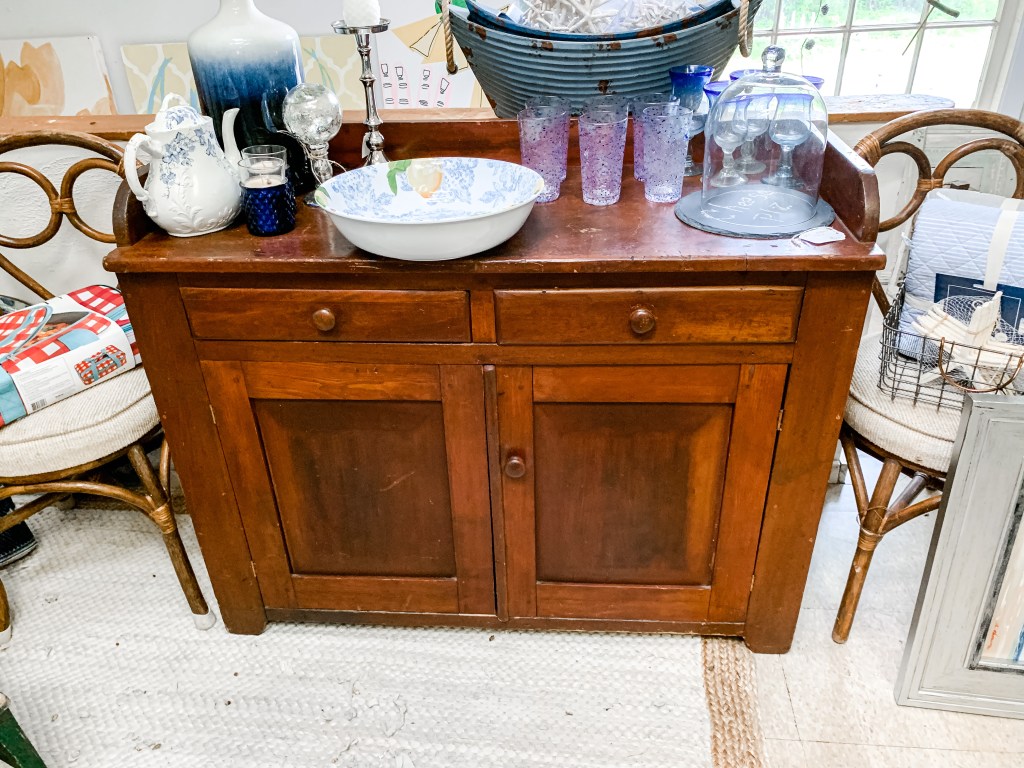
With a new home comes new furniture. Instead of buying everything brand new from the big box stores, try searching for one of a kind pieces at local antique/vintage shops or other second hand stores. Many of them are small, local businesses, and in supporting them, you are also reducing waste and reusing the furniture that you rescue! I found almost all of my large furniture (entry table, entertainment center, two gorgeous mirrors, kitchen table, sideboard) at the Potomac French Market.
The sideboard which family friends are helping me refinish.
The sideboard definitely needed the most work but the other treasures only needed a screw or a fresh stain. Now, my new home has amazing statement pieces that have a great story behind them and will hopefully stay with me for years to come.
As you can guess, packing can generate A LOT of waste. Since I am only going a few miles away, which makes this a lot easier, I am trying not to buy any new vessels (i.e. boxes) to transport my possessions. I’ve been lucky, because with many of my neighbors being home, they have been cleaning out their homes, and because they knew I was moving, they gave me a lot of old plastic containers, suitcases, etc. I packed all of my clothes and bedding into suitcases that were coming with me anyway, and have been wrapping more fragile items in old newspapers and recycled packing materials. I had to purchase a large recycle bin for my kitchen and I went right ahead and filled that up with smaller items too.
If you are going longer distances and need to use more boxes and structured materials, or your neighbors aren’t conveniently giving away old plastic tubs, try asking your local businesses for their leftover boxes. With all of the shipments that they get in, they are sure to have boxes that they can save for you. You can also find boxed from brands like Eco Enclose which have recycled, recyclable, compostable packaging. They are great for small packages for friends to moving boxes for your next great adventure.
My last sustainable tip for moving (as of right now) is to reduce your carbon footprint as much as you can! As I mentioned, I am only moving a few miles away from where I currently live, however, I am not going to take car load after car load to my new home. After I make settlement, I am going to go over and deep clean the condo before all of my belongings get there. Each trip, I am going to take a car load, but only because I am going there anyway. I have also arranged a U-Haul for one day so I can move all of my big items and everything else that hadn’t made it in my other trips over there. Even if you are moving yourself, reduce your carbon emissions by renting a truck for a day, or even an afternoon, to help cut down on the back and forth of local moving.
And now for the sustenance part of the post! Mint Pesto Zucchini Noodles I had an abundance of mint from the Farmer’s Market and I didn’t want it to go to waste so I made some fresh ‘zoodles’ and made a veggie centered meal. – Use fresh zucchini and spiralize them yourself. I used half fresh and half frozen zoodles and, as you can guess, the fresh ones were 100000x better. – Add some protein for a heartier meal! I added some chicken sausage but salmon, chicken, or a tofu substitute would work great!
Well folks, that’s all I have and I promise I will be back with regularly scheduled content soon! Stay up to date on my daily adventures to a more sustainable life by following @sustenanceandsustainability on Instagram!
As states (and countries, for all my foreign readers) start opening up, some people are headed back to offices or whatever their new places of work are. My current commute is still from my bed to my home office, and yet somehow, I still run late sometimes. As commutes become longer, like to a building that we do not live in, we have to start packing our lunches, as opposed to that all day grazing that has become an increasingly bad habit. I want to help make the transition to the new normal, as easy and sustainable as possible, by showing everyone some brands that help make packing your leftovers for lunch more waste free. Bring your own cup to get coffee from your local coffee shops, eat your Chipotle with a reusable fork, and put your snacks in reusable bags.
***Disclaimer: All opinions and research are my own. Do with it what you may, but may I remind you, I am an Accountant, not an Environmental Scientist or an English Professor. ***
It’s not about Deprivation or doing Without, it’s about Better Choices
Rachelle Strauss
Think back to your average lunch at work. Did you pack your own lunch or get food nearby? Did you grab their plastic utensils or bring your own with you? Did you use a straw? Did you get a cup there or did you bring your reusable tumbler? Did your food come in a plastic or paper bag? Was the food container compostable? Depending on how you answered these questions, you might be disappointed when you realize how many single use plastics you are going through. As the Simple Swap series continues, here are some ways to make your back to work lunches more organized, less squishy, and a little more eco-friendly. Who thought it was a good idea to put strawberries in bags? Let alone plastic ones.
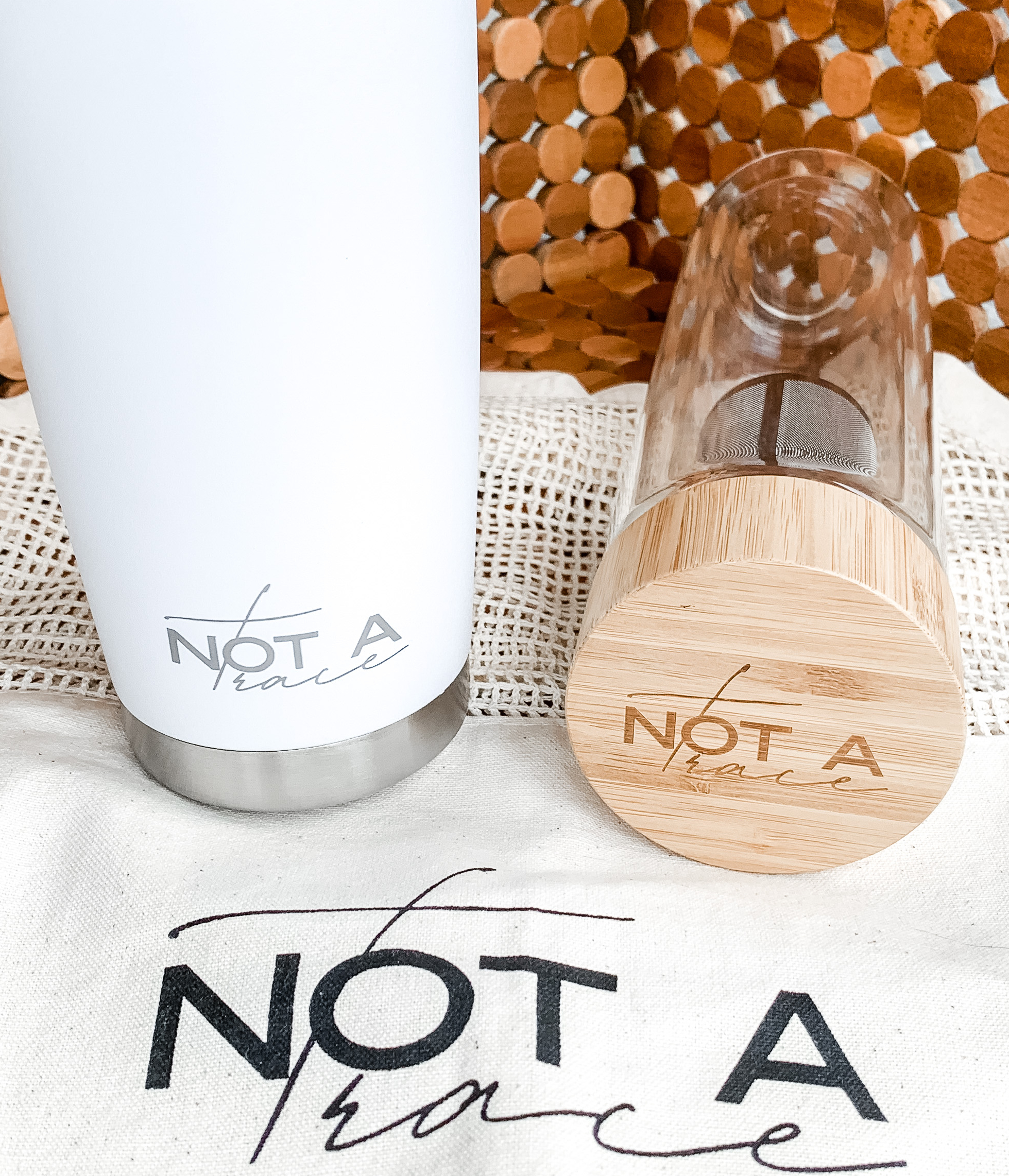
Reusable Tumbler: I prefer tumblers because they are great for hot and cold beverages and they have a lid so they are laptop safe. They keep ice frozen for hours, and your hot drinks hotter than you would like for far too long. Not-A-Trace has reusable tumblers (in 30oz, 20oz, 17oz and 12oz which happens to be the PERFECT size for a cocktail or a college pour of your favorite wine), loose leaf tea infusers, reusable straws, bags, and a variety of other items. Save a turtle, buy a tumbler. See above for picture.
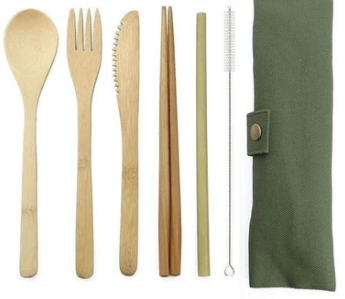
Photo from Ecoafter.com (Bamboo Cutlery Set)
Cutlery: This one really gets to me. While I am a believer that my vegetarian Chipotle bowl really does taste better with their forks, I know that the single use plastic cutlery isn’t worth it. If you don’t want to spend any money, simply bring a piece of your current cutlery from home. Goodwill is also a great place to get cheap silverware. If you want something more cohesive, Eco After has sets made of stainless steel or bamboo. They both come with a fork, knife, spoon, straw and cleaner, and chopsticks. So bring a set to your office to keep in your desk, and say no to plastic silverware if you get food to go.
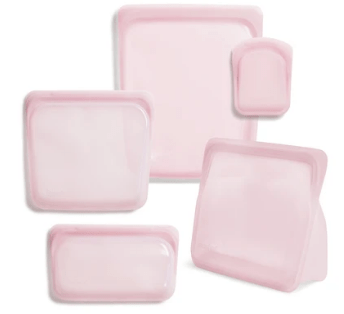
Photo from Stasher.com (Rose Quartz Bundle)
Ziplock Bags: I still remember the horrors of trying to get my peanut butter and jelly sandwiches into plastic bags without squishing them. Thinking back to how many plastic bags I used, and realizing that ALL of them are somewhere in a landfill or ocean or somewhere else, is terrifying. Stasher makes reusable silicone bags that are dishwasher, oven, freezer, and microwave safe. They seal extremely tight and have enough structure so that they don’t squish your food. With a variety of sizes, they can replace pretty much any single use, plastic bag. Ecoafter also had a few other options including ones that look like mason jars!,
Lunch Containers: Skip the plastic bags and containers and opt for something a bit sturdier. When I pull out my reusable lunch container, even if my life is in shambles, I feel like I have everything under control. There are many different brands, such as PlanetBox or ECOlunchbox, but honestly, my favorite place to shop for them is at Marshall’s because they have so many different shapes and sizes. I prefer to get the glass, airtight ones because they are great for soups, curries, and pretty much any other food that you would not want to have spilling all over your lunchbox.
On the topic of lunch boxes, many of my coworkers buy lunch from local restaurants or food trucks (yay supporting local, small businesses!) but that creates more waste, and often times, the food you are consuming has come from miles away (see my Farmer’s Market post). Help reduce your carbon footprint and meal prep! Pop over to the Savory Lunches section for great recipes that will make your meal prep easy!
I also wanted to take time at the end of each post to feature some sustenance. This week’s featured recipe is Apple Clafoutis. This recipe is PERFECT and easy. Just some notes: – I used chopped Honey Crisp apples – Try it with different fruits. I replaced two tables spoons of maple syrup with mascarpone cheese and replaced the apples with halved and pitted cherries. – if you aren’t using a mixer, or a sifter that you can use with one hand, you may need some help sifting and stirring at the same time.
As you all head back to work, stay safe and sustainable, and, as always, if you have any questions, comments, or suggestions for future posts, drop me an email at hello@sustenance-and-sustainability.
So this update is the prequel to what will soon be the natural deodorant swap, but, and I CANNOT emphasize this enough, MAKE SURE YOU DETOX BEFORE YOU SWITCH. The detox helps pull out toxins (such as aluminum) out of your body so that the natural deodorant can work better. Thank you for coming to my TEDTalk.
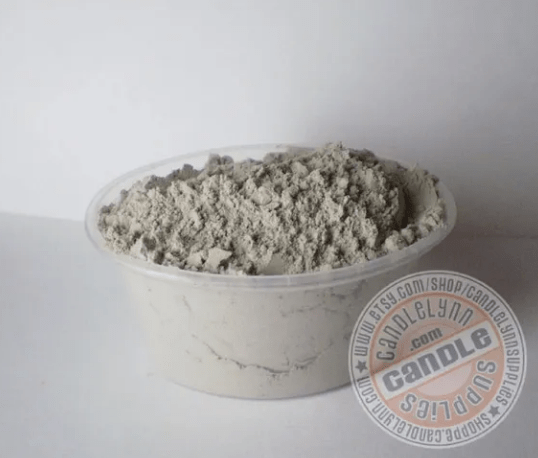
I’ve heard so many stories about how natural deodorant doesn’t work but I was determined to make the switch while my interactions with humans was at a minimum. I read about different ways to detox (almost all including something called bentonite clay) but I wanted to get started ASAP so, I quit cold turkey. Less than 24 hours into this experiment, I was smelling less than pleasant and washing my body twice per day. I ordered some bentonite clay from this Etsy shop and continued to try to effectively detox while I waited for it to arrive.
Photo from Candle Lynn Candle Company
As the days went on, I was tired of the general smell of my body so I turned to essential oils. I have many of them for my infuser, and after reading that tea tree oil has been known to kill bacteria, I figured that I couldn’t smell a whole lot worse, so I gave it a try. I started to put it onto my armpits after my showers and I noticed a huge difference. Day by day it got better. About a week and a half into my detox, the clay arrived!
This stuff worked wonders. I used a Tbsp of clay powder and enough water to make it into a smooth, mask like texture. This took A LOT of trial and error but here are my general notes: – Use a fork to mix it because it helps get the lumps out. – You can also add apple cider vinegar with the water but I found that I then smelled heavily of vinegar… which I guess is better than B.O. but… – Add as mush water as you see fit. Add small amounts at a time but every . time I made it, it took different amounts of water. IDK, just make it thick . .. enough.to spread smoothly and evenly. – If you make too much, cover it and store on your counter. It doesn’t dry o out super fast.
I used an old mask applicator and spread an even layer on each arm pit and let it dry. Yes, you will look odd. I was laying on my living room floor with both arms in the air waiting for it to dry but… you gotta do what you gotta do. Once it dries, you can take a shower or just get a warm washcloth and wipe it off. Regardless, I was amazed by the results. I smelled a whole lot less, and felt great (you get a kind of cooling sensation while it’s on). I detox pretty much every day and the clay mask helps pull out the aluminum and many other toxins in your armpits.
But why stop there?!?! I applied it to blemishes and other skin impurities and they looked so much better after. I read that bentonite clay is also safe to brush your teeth with but I think I’ll stick to the toothpaste bits. Overall, the bentonite clay gets a 10/10 and I will make sure that I always have some at home. It is so versatile, made a huge difference in my transition to natural deodorant, and can be used for so many different things.
Stay tuned for phase two as I try out a few different natural deodorants, and hopefully find one that makes me not smell. We will see. For now, I’d like to apologize to all those around me (basically two people and a cat) for sticking with me through this oddly smelling time.
So since we are at home, I thought now would be a great time to try all of the things I wouldn’t normally try if I had to be in the office every day. The first thing I decided to do was to see if I could get my hair adapted to using natural shampoo alternatives. After a virtual happy hour with my coworkers, I decided I would be the lab rat yet again and give it a go. I Googled and Pinterested to see what people were saying about the experience and what they were using to rinse their hair. Based on the overwhelmingly positive feedback, I decided that using apple cider vinegar and baking soda was the best way to go. I had already been washing my hair less than I probably should have been (but then again, who isn’t?) and was ready for the challenge.
Hair wash 1: It had been a good few days since I had washed my hair so I grabbed a cup, measuring spoon (the ones that come with liquid medicine work great), apple cider vinegar, and baking soda. I used: – 1 Tbsp of baking soda mixed in 1 liter of water – 1 Tbsp of apple cider vinegar in 2 liters of water
I used the cup to gently pour the baking soda mix all over my head and scrubbed it into my scalp as I went. I waited about five minutes (during which, I exfoliated my legs), mixed the apple cider vinegar wash and, again, poured and scrubbed. The overall washing process takes a bit longer because I was constantly picking up the cup, pouring small amounts, then scrubbing and repeating, but I was willing to give it a try.
After the first wash, it felt great to have clean hair and I was pleasantly surprised by how well it went.
Hair wash 2: Four days after my first wash, I was impressed with how my hair was holding up. My hair wasn’t overly oily and I was happy with how clean it was after the baking soda and vinegar wash. My hair was a little lackluster but I was hoping it was just an adjustment and would go away.
Hair wash 3: By the time the third wash came around I was really starting to get worried about how much water my showers were using up. I guess I could have turned off the water as I was scrubbing/pouring the solutions in my hair but… my sustainability isn’t perfect and I get COLD.
Lets jump to hair wash 6. It was not looking good. My scalp was so itchy and my hair was not looking cute. It was a ‘put your hair up in a nice messy bun everyday’ kinda vibe. Yikes.
After about 6 weeks, I had to throw in the towel. My hair has recovered but my scalp is still struggling. Did I quit too early? Maybe? There are just so many other ways to be more environmentally friendly without sacrificing your comfort.
I would give it an overall 3/10. I think that it could definitely supplement your normal, sustainable washing but right now I just need my head to get back to normal. So, feel free to add it in with your normal regime of liquid shampoo from Plaine Products or a shampoo bar from HiBAR, but I came, I saw, and it conquered me.
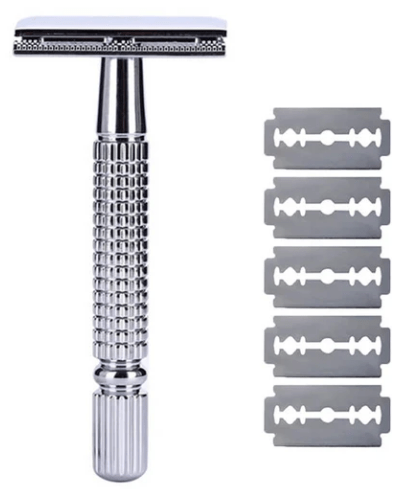
One of the first big swaps that I did was my razor. I used a Gillette Venus razor and waxed (that was a disaster) but I wanted another option that was better for the environment. I found a safety razor from Eco After so I decided to give it a go. It was reasonably priced and came in a case with extra blades. I wasn’t thrilled that the case was plastic, but I know that I will be using it for years to come and by the time I dispose of it, hopefully there are better ways for recycling plastic.
Eco After Safety Razor
I was incredibly nervous because I have a tendency to hurt myself doing the most basic tasks, but it was time so I went for it. I asked my boyfriend to be nearby incase of disaster. I started with my legs and did my first leg flawlessly. The second one was fine, except when I took a chunk out of my shin. I got cocky and paid the price for it. Turns out slow and steady really does win the race. With that in mind, I was able to do my armpits with no problems. Overall, I give it a 9/10 solely because it devoured a chunk of skin due to user error. Call me petty but I almost got blood on my WHITE carpet.
Definitely worth making the swap and I’m sure I will adjust to it after a few tries. Until then, I will keep the bandaids near by and pray that I don’t have to figure out how to get blood out of bathmats and bedroom floors.
Also, if you have any tips on how to shave your knees with a safety razor (do you bend your knee or straighten it?!?!) please feel free to send me an email.
I’m not kidding. Send it to hello@sustenance-and-sustainability.com.
Don’t forget to subscribe to stay up to date with my sustainable journey and everyday tips to make yours a little easier! Just wait for my ‘no shampoo’ post…. I did it so y’all don’t have to!








 Sustenance and Sustainability